Every watch should earn its place.
A catalog tells you what you own. Horowell shows you what the collection means (its shape across ten dimensions) and scores every watch you’re considering against the collection you actually want to build.
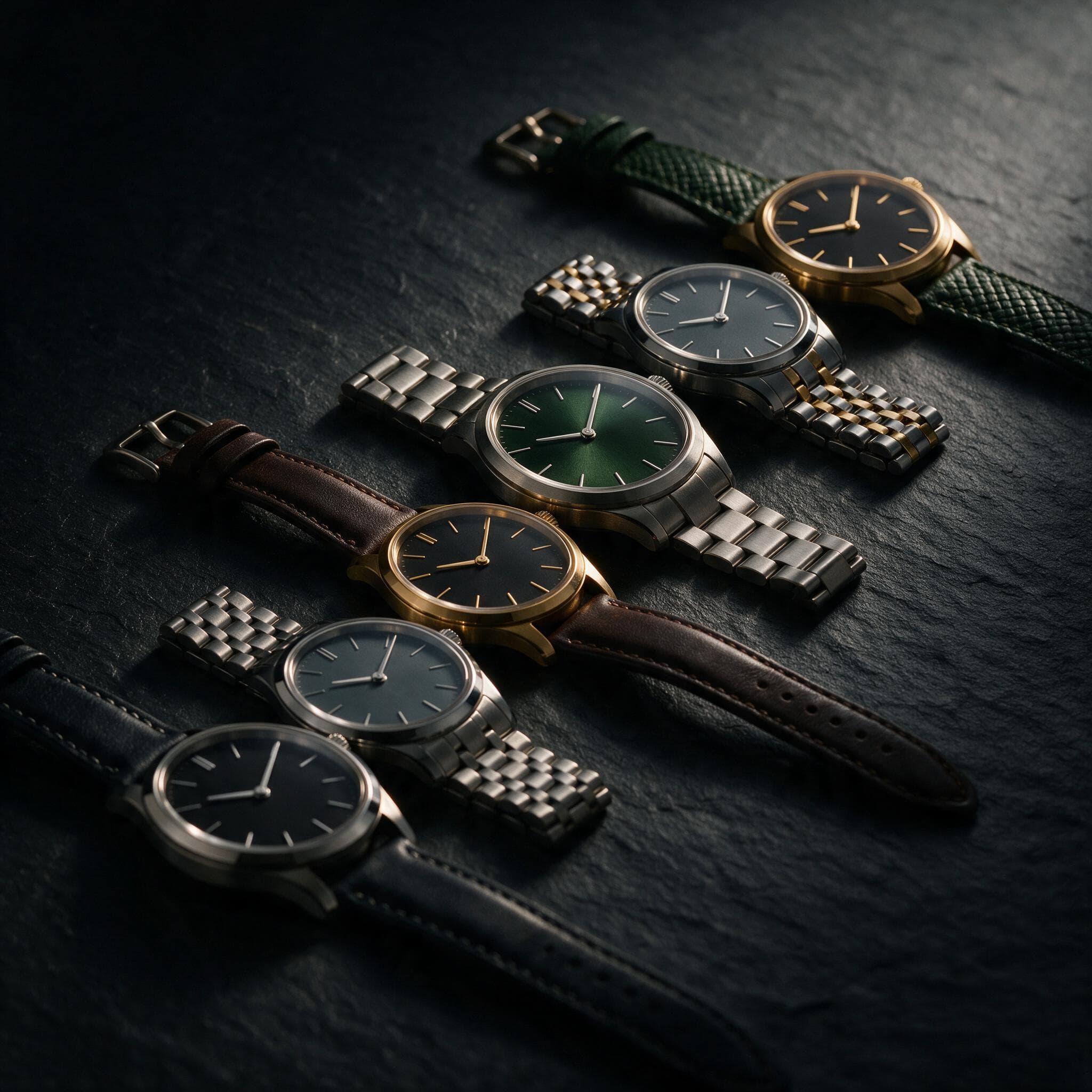
Every collection has a shape.
Most collectors have never seen theirs.
Ten watches in, patterns you never chose start choosing for you: the same case size again, a fourth black dial, another automatic. Horowell reads your watches across ten dimensions and shows you the collection’s actual shape: where it runs deep, where it’s narrow, and what it says about how you collect. It starts reading at your very first watch.
This isn’t asset management. A collection isn’t a portfolio to optimize. It’s a story you’re telling one watch at a time. Horowell makes sure you’re the one telling it.
Four tools, every one of them live today.
The shape of your collection
Ten dimensions, one diversity score, and the archetype your watches say you are. Where the collection runs deep and where it runs narrow, with the counts behind every claim.
Fit, before you buy
Tell Horowell the collection you’re trying to build. Every watch you’re watching or hunting gets a 0 to 100 Fit score against your stated intent, with the reasoning, not just the number.
From grail to wrist
Grails → Watching → Hunting → Collection. A watch moves up as your intent hardens, a hunt carries a target price, and Sold closes the loop with what you made or lost.
Adding a watch is a search or a link
Type a name or paste the brand’s own page, and the reference, specs and image fill in from a shared catalog, vintage and discontinued watches included. Your part is the date and what you paid.
Decide what you’re building.
Horowell holds you to it.
Pick the axes that matter to you (one of each type, deep in divers, a spread of eras) in plain language, ranked by priority. That’s your collecting philosophy, and every Fit score Horowell gives you is measured against it, not against someone else’s idea of a proper collection.
Then it holds you to it. When your last six acquisitions disagree with the philosophy you stated, Horowell says so. Change the philosophy or own the streak. Either is fine, but you’ll do it knowingly.
What we measure, and what we don’t
A collection isn’t a pile of watches. It has a shape. To read that shape, we score every watch across ten dimensions: the traits that genuinely make one watch feel different from another. Spread across all ten is a balanced collection; clustering in two or three is a blind spot worth knowing about.
What it does
Watch Type
Diver, dress, pilot, chronograph, GMT: the watch’s reason for existing.
Movement
Automatic, manual-wind, quartz, Spring Drive: how it keeps time.
Complications
Date, chronograph, moon phase, GMT and beyond. We count every one, not just the headline.
How it’s built
Case Material
Steel, titanium, gold, bronze, ceramic, carbon and the rarer alloys.
Case Shape
Round, cushion, tonneau, rectangular, integrated: the silhouette on your wrist.
Size Presence
How large a watch wears, judged from its real proportions, not one diameter number.
How it reads
Dial Color
The dominant color family, from classic black to salmon, meteorite or fumé.
Dial Finish
Sunburst, matte, enamel, guilloché. A single dial can carry several.
Where it comes from
Brand Origin
Swiss, German, Japanese, microbrand: the watchmaking tradition behind it.
Design Era
The period a design belongs to, from pre-war through to contemporary.
Two of the ten, Brand Origin and Size Presence, we work out for you automatically, from the brand and the measurements, so you never hand-classify them and everyone’s collections are measured the same way.
What we deliberately don’t score
We track plenty of other details. They just don’t belong in the score, and here’s the reasoning.
Price
A diverse collection isn’t an expensive one. Scoring price would reward spending and punish anyone building within a budget. We track value for you. It never touches your score.
Straps & bracelets
A strap is a five-minute swap, not a different watch. If straps counted, you could buy diversity with a NATO and a leather band. We remember them; we don’t grade them.
Occasion
Too subjective, and it mostly just echoes Watch Type. We left it out so the score measures the watch, not a mood.
Raw specs
Exact diameter, water resistance, crystal: these matter and we keep them, but as inputs, not scores. How a watch wears is what counts, not 41mm versus 42mm.
Every scored dimension is intrinsic (you can’t change it by swapping a strap or paying more) and observable, right there on the watch. That’s what keeps the reading honest: it reflects what you actually collect, and it can’t be gamed.